General information only, not personalized financial advice. Disclaimer.
Ever had a month where everything is fine… until the car registration, a wedding gift and the annual insurance bill all show up at once? That’s not bad luck. Those expenses were always coming — they just weren’t in the budget.
Sinking funds fix that. You save a little every month for the things you know are coming, so when the bill arrives, the money is already sitting there.
How a sinking fund works
- List the irregular expenses you know are coming in the next 12 months.
- Estimate the cost of each one.
- Divide by the number of months until you need it.
- Save that amount every month in a separate place.
Example
Christmas costs your family about $900. It’s January, so you have 11 months.
$900 ÷ 11 = about $82 a month.
When December comes, you shop with cash you already have — no credit card hangover in January.
The most common sinking fund categories
| Sinking fund | What it covers |
|---|---|
| Holidays & gifts | Christmas, birthdays, Mother’s/Father’s Day, weddings |
| Car | Registration, insurance, tires, servicing, repairs |
| Home | Repairs, appliances, yard, maintenance |
| Medical | Dentist, glasses, copays, prescriptions |
| Kids & school | Uniforms, supplies, excursions, sports fees |
| Annual bills | Subscriptions, memberships, insurance paid yearly |
| Travel | Holidays, trips to see family |
| Pets | Vet visits, vaccines, grooming |
| Clothing | Seasonal clothes and shoes |
You don’t need all of these. Start with the three that hurt most last year.
How much to save: a simple worksheet
For each fund, write:
- Goal amount: what it will cost
- Due date: when you need it
- Months left: count them
- Monthly amount: goal ÷ months left
Then add up all the monthly amounts. If the total is more than you can afford, that’s useful information — trim the goals (a cheaper Christmas, a smaller trip) or stretch the timeline.
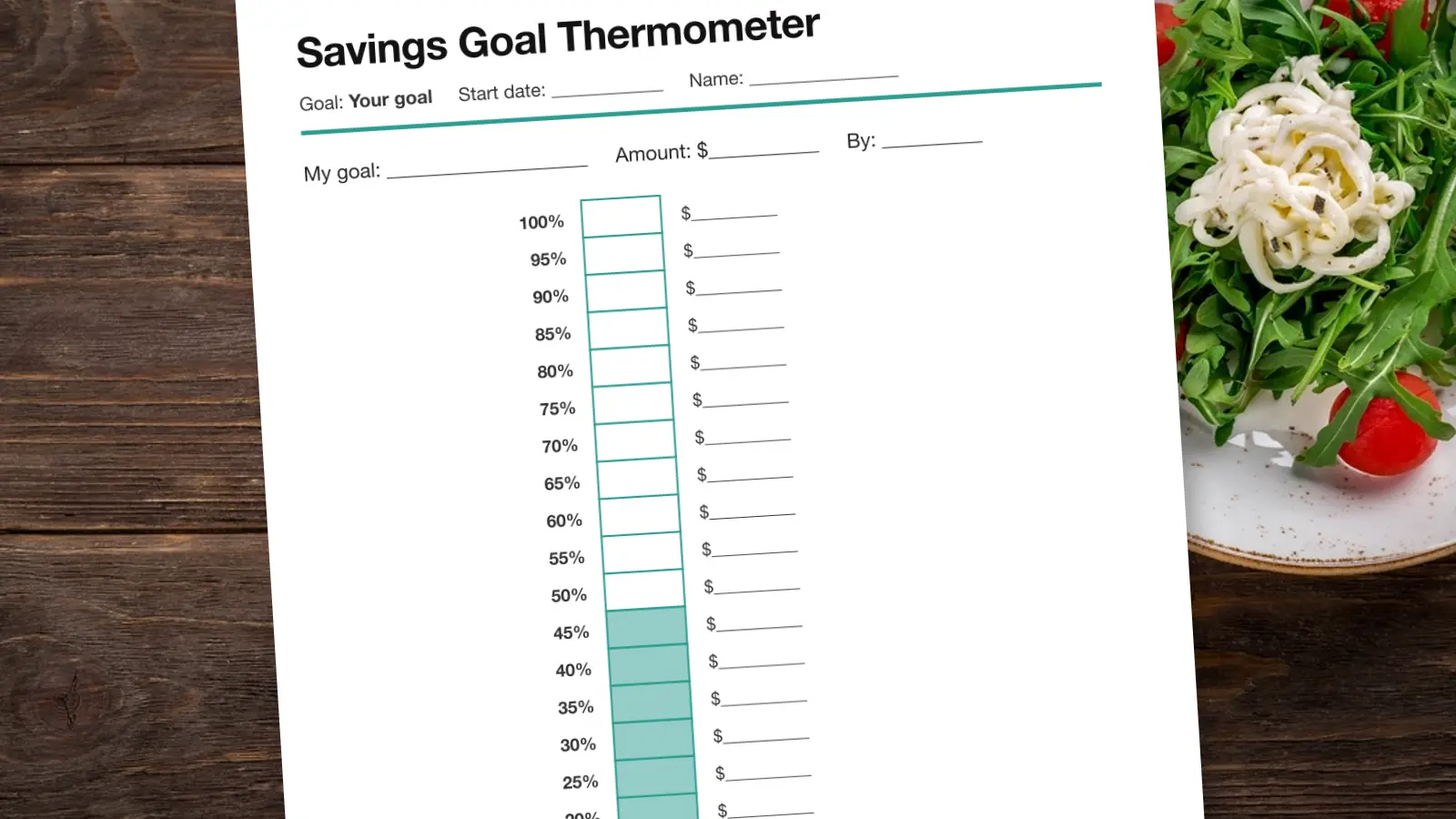
Our savings goal thermometer works great here. Print one per fund, write the goal at the top and color it in as you save.
Where to keep the money
The key is keeping it out of your everyday account so it doesn’t get spent by accident. Options:
- One separate savings account with a simple tracker (paper or spreadsheet) showing how much belongs to each fund.
- Banks with labeled “buckets” or sub-accounts — many online banks offer this free.
- Cash envelopes for small funds like gifts or clothing (see our cash stuffing guide).
Sinking funds vs. an emergency fund
They work together, but they’re not the same:
- Sinking fund: predictable. Christmas will happen.
- Emergency fund: unpredictable. Job loss, a sudden medical bill, a broken-down fridge you didn’t see coming.
If you only have money for one, start with a small emergency fund — even $500 — then add sinking funds.
Tips that make sinking funds stick
- Automate it. Schedule transfers on payday so you never “decide” to save.
- Round up. $82 becomes $85. Small cushions help when prices rise.
- Review every quarter. Prices change; adjust your amounts.
- Use windfalls. Tax refund? Top up the funds that are behind.
- Don’t raid one fund for another unless you have a plan to pay it back.
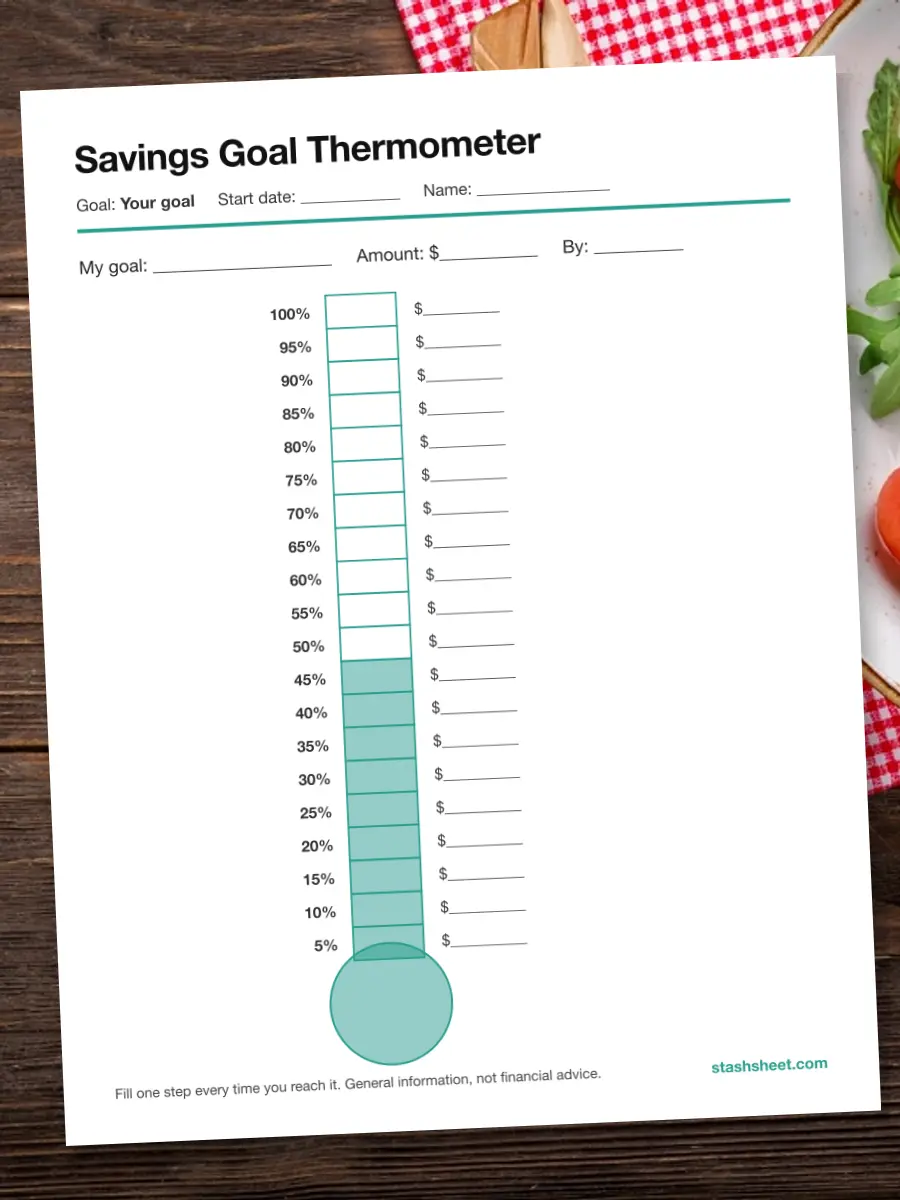
Savings Goal Thermometer
Write your goal at the top, split it into 20 steps and fill the thermometer as you go. Works for any amount. Free one-page PDF, no email needed.
Download free PDF PreviewFrequently asked questions
What is a sinking fund?
A sinking fund is money you set aside a little at a time for a specific future expense you know is coming, like holidays, car repairs or annual bills.
What's the difference between a sinking fund and an emergency fund?
A sinking fund is for expenses you can predict (Christmas, car registration, school costs). An emergency fund is for things you can't predict, like losing your job or a medical bill.
Where should I keep sinking funds?
Many people use one separate savings account and track each fund on paper or a spreadsheet. Some banks let you create several labeled savings 'buckets' for free.
Sources
- CFPB: savings plan worksheet (PDF)
- CFPB: Looking for an easy way to save money? Make it automatic
- FDIC: Understanding deposit insurance
These are official, free resources. This article is general information, not personalized financial advice — for decisions about your own money, talk to a licensed professional or a nonprofit counselor.